

Ranking on Google won’t automatically bring clicks or leads to your site, but featured snippets can. You could have good content and strong seo strategies. But if Google’s featured snippet highlights a competitor’s content, most may not get to see yours.
Featured snippets are the answer boxes at the very top of the search results that put you where your audience is searching. It gives users the information they need instantly, builds trust, and drives traffic to your website.
This is a sweet spot for SaaS and fintech brands. Getting featured in Google snippets means more visibility, higher-quality leads, and a stronger presence on Google’s search engine results page.
In this guide, you’ll learn how to structure and optimise your content to get featured snippets and own that prime position on Google.
What are Google featured snippets?
Featured snippets are short, clear answers to a search query that appear at the very top of Google’s search engine results page. Simply put, they’re search results that “best answer a user’s query.”
Google pulls the most relevant piece of content from a page and displays it as the first “best” answer, without users needing to click through multiple web pages
Whether it’s a paragraph, a table, or a video featured snippet, the goal is to get your content in position zero so your SaaS or fintech website gets noticed first.
Types of featured snippets
Google shows featured snippets in different ways depending on users’ search queries. Understanding the types helps you format your pages so they get picked. Let’s take a look at the main types of featured snippets:
- Paragraph snippets: short answers that get straight to the point. If someone searches “What is SaaS?” Google can pull a concise paragraph from your page that explains it clearly.
- List snippets: used to show steps or rankings. Think “Top 5 Fintech apps for 2025.” They are easy for Google to grab and for users to scan.
- Table snippets: perfect for pulling structured information from your page into a table so users see everything at a glance. For example, a table comparing different SaaS pricing.
- Video snippets: highlights video content that best answers a question, like tutorials or demos. Clear titles and timestamps help your video get featured.
- Knowledge panels: show key brand or product details to highlight authority. For instance, company details, statistics, or product highlights.
Benefits of featured snippets for SaaS & Fintech sites
Getting featured in a Google featured snippet puts your content in front of users before they scroll. For SaaS and fintech websites, this directly impacts visibility, clicks, and lead quality across the search engine results page. Here’s what it means for your website:
- Instant visibility at the top of Google SERP
- More clicks from people actively looking for your solution
- Builds trust and credibility because Google chose you first
- Attracts qualified leads and conversions to your site
- Guarantees a stronger and more effective SEO strategy across SERPs
The difference between traditional ranking and snippet visibility
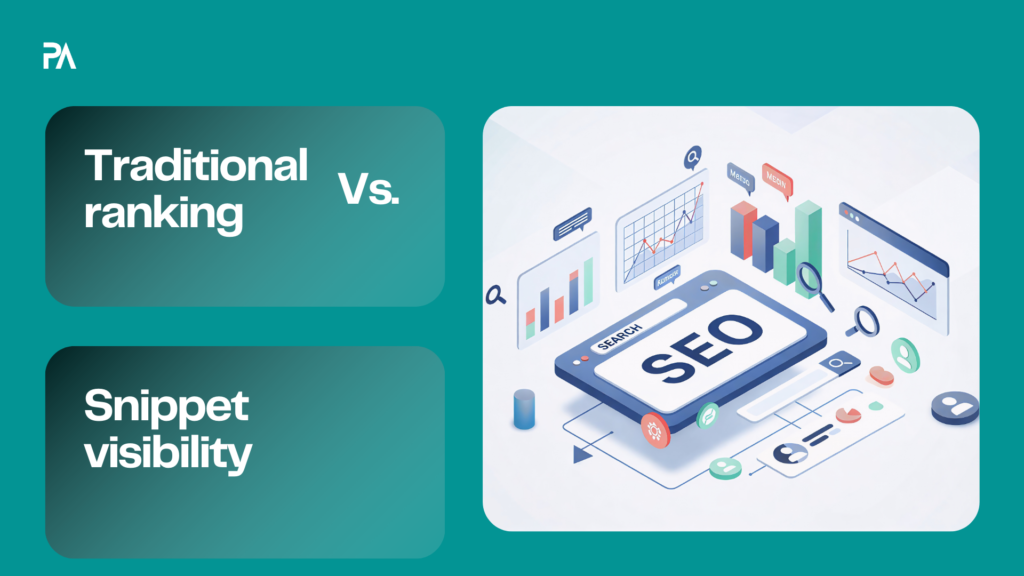
Ranking on the Google first page is great, but getting into a featured snippet takes your visibility to the next level. Here’s what makes them different:
| Traditional ranking | Snippet visibility |
| Appears as a blue link on the search engine results page | Displays in a featured snippet box at the very top |
| Users have to scroll and decide to click | Users see your answer instantly |
| Competes with multiple results on the SERPs | Stands out alone in position zero |
| Relies mostly on backlinks and SEO authority | Relies on clear answers and how you structure your content |
| Often loses clicks to snippets above | Captures attention first and can get more clicks |
Traditional ranking puts your page somewhere on the search results page as a standard blue link. Users have to scroll through multiple results and decide whether to click. Also, visibility depends mostly on SEO authority, backlinks, and overall rankings.
Snippet visibility works differently. Your content appears at the very top of Google’s results, and users get to see your answer first. It builds trust and attracts more clicks before considering other competitors.
Beyond ranking signals, Google selects content that directly answers the user’s search query. This means optimising your site for snippet visibility gets audience attention faster, drives more qualified traffic, and significantly improves your chance of getting featured on Google.
Why SaaS & Fintech websites struggle to rank in featured snippets
Even when your SaaS or fintech website ranks on the first page, getting a featured snippet can be tricky. There are a few reasons why Google doesn’t pick your content, and understanding them is the first step to fixing it.
Here’s why your site could be missing out:
Technical jargon and complex content
SaaS and fintech content often uses heavy industry jargon that can confuse Google. Terms like API endpoints, blockchain protocols, or complex financial instruments may make sense to your audience but not to search engines.
For example, detailed API documentation might rank for niche searches. But a simple FAQ explaining the same feature is much more likely to appear as a snippet.
High competition keywords
Popular SaaS and fintech search queries, like “best payment gateways” or “top project management tools,” are highly competitive. Even with good content, your pages are up against dozens of other websites already optimized to get featured snippets. This makes it harder to grab that prime spot.
Dynamic content challenges
Pages that need constant updates, like pricing tables, stock updates, or dashboards, can be tricky. Google favors more stable content that it can display confidently anytime. Dynamic pages still rank but rarely make it to position zero.
Poorly optimized on-page SEO
Google can overlook quality content if the headings don’t match search intent. Paragraphs that are too long and unclear also get ignored. Breaking your content into scannable sections with clear headings and relevant keywords increases the chances of getting featured.
How does Google choose content for featured snippets?
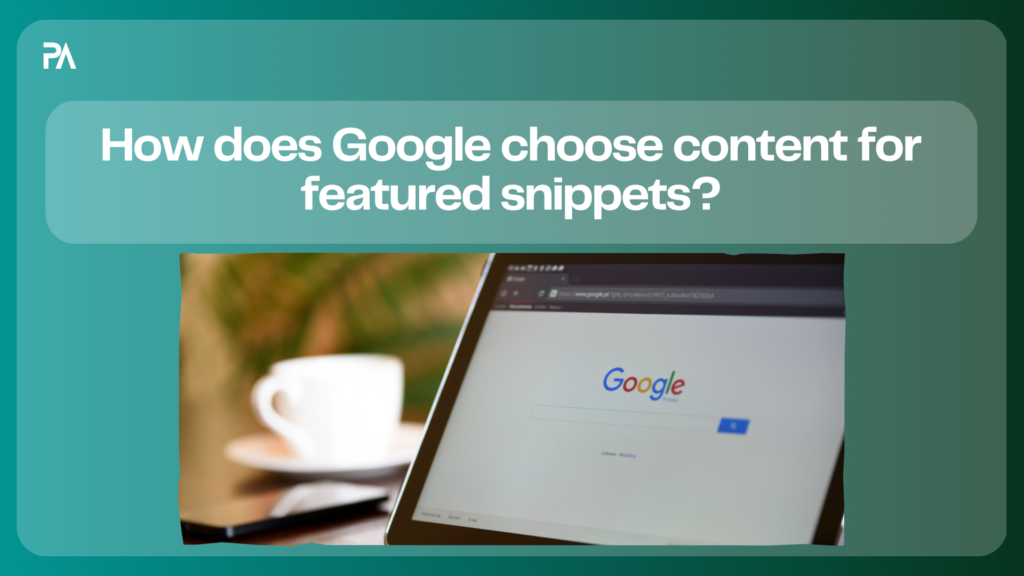
Google looks for content that answers search queries clearly, concisely, and in a format it can display easily. Here’s what you need to know to make your SaaS or fintech content snippet-ready:
Page 1 ranking requirement
Most times, Google only pulls content from pages already in the top 10 search results. For instance, a SaaS pricing comparison page sitting at #5 can still be featured if it provides the most relevant answer. Being on the first page is the starting point, but snippet optimization is what gets you position zero.
Matching user intent
Content that directly matches the search intent has the best chance of being featured. If someone searches “how to integrate Stripe API,” the snippet should give a step-by-step answer. Focusing on clear, actionable answers increases your chances of being featured.
Preferred content formats
Google prefers certain snippet formats over others because they perform better and are easy to pull. They include:
- Paragraphs: 40–60-word answers that get straight to the point.
- Lists: Steps-by-step instructions, rankings, or top features that are easy to scan.
- Tables: Comparisons of SaaS or fintech products side by side.
- FAQs: Direct Q&A with schema markup.
Evolving SERP features
Search results are always changing. AI summaries and voice assistants are now pulling snippet-friendly answers. That’s why creating content that’s well-structured, concise, and clear increases your chances of being featured.
Keyword research strategies for featured snippets
It’s important to target the right keywords if you want your content to appear in a featured snippet. Not every keyword is snippet-friendly, so focusing on the right ones will give you a real advantage. Let’s break down the most effective keyword research strategies for SaaS and fintech websites.
1. Identify high-intent queries
Focus on search queries that show strong intent. Keywords like “what is,” “how to,” “best,” “vs,” or “comparison” get the job done. For example, “Best CRM software for startups 2025” is a clear high-intent query that people are actively searching.
2. Competitor snippet gap analysis
Check the pages that are already featured for your target keywords. Find the gaps your competitors haven’t fully answered and create content that fills them.
3. Focus on long-tail keywords
Long-tail keywords are more specific and easier to target in snippets. For example, “How to automate invoicing in a fintech app” targets a very specific user need. These queries often face less competition and have higher search intent.
4. Tools for keyword discovery
Use tools like Ahrefs, SEMrush, Mangools, or Google Search Console to find snippet opportunities. Track search volume and analyze which queries trigger snippets. These insights help you optimize your content and increase visibility in Google’s featured snippets.
How to optimize SaaS and Fintech content for Google featured snippets
Creating content that ranks is one thing, but getting featured snippets requires a more strategic approach. For SaaS and fintech websites, it’s more about making your content easy for Google to pull answers from. Here’s how you can optimize your content to get noticed:
Paragraph snippets optimization
Keep your answers short and clear. It should be 40–60 words. Start the paragraph with keywords naturally so Google immediately knows what the content is about. Make sure they are easy to scan and directly answer the query.
Example:
Query: “How does SaaS subscription billing work?”
Snippet-ready answer: “SaaS subscription billing lets businesses pay monthly or annually, with features and limits varying by plan. This allows companies to pick the plan that best fits their team size and usage needs.”
List snippets optimization
Lists work best for step-by-step instructions, guides, and rankings. Use numbered or bullet points, and SaaS/fintech-specific actions that users can follow. Include real SaaS examples—like setup guides or onboarding steps.
Example:
Query: “How to integrate Stripe payment gateway in my SaaS platform?”
Snippet-ready answer:
- Sign up for a Stripe account.
- Retrieve your API keys.
- Connect your SaaS platform to Stripe.
- Test payment workflows.
- Go live and monitor transactions.
Clear, concise lists make it easy for Google to feature your content as a list snippet, which often drives more clicks.
Table snippets optimization
Tables are great for comparing features, pricing, or tiers. Make sure the data is scannable, easy to read, and arranged clearly.
Example:
| Plan | Monthly Price | Key features |
| Basic | $29 | 5 users, email support |
| Pro | $79 | 20 users, priority support |
| Enterprice | Custom | Unlimited users, dedicated manager |
Well-organized tables give Google content that it can pull directly into a table featured snippet.
FAQ & schema markup optimization
Adding FAQ schema to your pages helps Google recognize Q&A content and tells search engines your content is snippet-ready. The trick here is to focus on questions your users actually ask.
Example:
Query: “How can small businesses track expenses in a fintech app?”
Answer: “Most fintech apps let you link bank accounts, categorize expenses automatically, and generate reports in real time, helping small businesses stay on top of their finances.”
Headings optimization
Use H2s and H3s that match exact search queries people are asking. This helps Google find snippet-worthy content on your page. The headings should be actionable and question-focused.
Example:
H2: “Best Payment Gateways for SaaS”
H3: “Step 1: Choose a Gateway”
Clearly structured headings make your content readable and easier for Google to pick the right answer for a snippet.
Advanced tactics to win featured snippets in SaaS & Fintech
Once your content is optimized for basic snippet formats, it’s time to take things up a notch. Advanced tactics can help your SaaS and fintech content stand out and stay ahead of competitors. Here are proven strategies to take your snippet game to the next level:
Update dynamic content regularly to stay relevant
Google loves fresh and relevant content. Make sure your pricing tables, API documents, and product features are always updated. This way, your content is more likely to get picked for a snippet.
Leverage internal linking & authority
Link the pages you want to feature to strong, high-authority pages on your site. It tells Google which content matters most and increases your chances of appearing in position zero.
Match headings with search intent
Your H2s and H3s should sound like the questions users are asking. For instance, “How to Set Up SaaS Onboarding Automation.” When the headings match search queries, Google can easily spot which content to show in a featured snippet.
Monitor snippet performance
Use Google Search Console to track which pages are appearing in snippets. If a page isn’t performing well, tweak the answer, adjust headings, or reformat your content. Small changes can make a big difference.
Optimize for voice search
Write short, natural answers that people would naturally speak. Conversational content not only helps your answer show up in featured snippets but also in voice searches. For example:
Query: “What is the best SaaS tool for email automation?”
Answer: “MailChimp is a top SaaS tool for email automation. You can create campaigns, automate workflows, and track results easily.”
This helps your content show up in both featured snippets and voice searches.
Incorporate multimedia
Adding pictures, charts, or videos to your content makes it more engaging and snippet-friendly. A short demo video or a clear chart showing a fintech app setup can help Google feature your page as a video snippet or table snippet.
Measuring featured snippet success
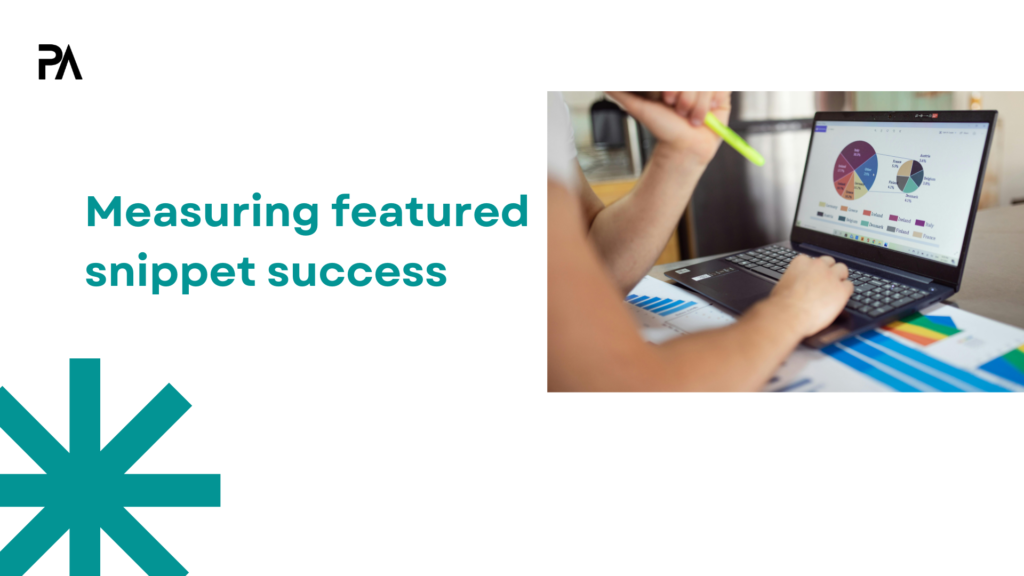
Once your content starts showing up in a featured snippet, you need to know if it’s delivering results. Here’s how to measure what’s working and what needs fixing.
Key metrics
Pay close attention to click-through rates, snippet impressions, and changes in your rank position on the search engine results page. A snippet that shows often but gets few clicks usually needs a clear or more relevant answer.
Tools to monitor performance
Start with Google Search Console to see which search queries trigger snippets and how users respond. Then use tools like Ahrefs, SEMrush, or Mangools to monitor SERP movement. Use them to find new snippet opportunities and monitor your competitors.
Analyze snippet types driving traffic
Identify the formats that perform best for your content and bring the most clicks to your sites. Paragraph snippets, list snippets, and table featured snippets can drive very different results depending on the query. This helps you decide what to double down on.
Adjust content based on performance results
Use the data you’ve gathered to make smart updates. Adjust headings to better match search intent. Shorten your answers and reformat your content. Small changes like these can improve your chance of getting picked, helping you keep the featured snippet spot longer.
SaaS & Fintech featured snippet optimization checklist
For SaaS and fintech teams that want clarity, structure, and results, this checklist helps you optimize your content without overthinking it. Here is a step-by-step plan to stay focused and avoid guesswork:
- Look for search queries that trigger Google featured snippets, especially “what is,” “how to,” comparisons, and long-tail keywords.
- Decide if the query needs a short paragraph, a list, or a table featured snippet. Then build your content around that format.
- Use H2 and H3 headings that match search intent so Google can easily understand and extract your answer.
- Aim for short paragraphs, clean lists, or simple tables that deliver a clear and direct answer.
- Add structured FAQ and schema markup on important pages to improve chances of getting featured.
- Add real product examples, comparisons, onboarding steps, or pricing breakdowns to make your content more relevant.
- Monitor your page performance using Google Search Console. Use Ahrefs to spot what’s working and make sure to adjust your content over time.
Conclusion
Featured snippets are one of the fastest ways for Saas and Fintech brands to stand out amongst other competitors. Landing the top spot in Google SERP boosts search visibility, drives traffic, and attracts more clicks from high-intent search queries.
The trick is to combine strong SEO strategies with well-optimised content. When keyword research, on-page SEO, and formatting work together, Google can easily choose your content for a snippet.
Make snippet optimization part of your ongoing workflow. Keep testing, updating, and refining your content to keep your site at the top of Google search over time.
FAQs
1. What are featured snippets?
Featured snippets are short, clear answers that Google shows right at the top of the search results page. It helps users get quick answers without the need to scroll through multiple links.
2. Do I need schema markup to appear in Google featured snippets?
Schema markup helps Google understand your page better and improves your chances of appearing in Google featured snippets.
3. How does Google choose featured snippets?
Google picks content that already ranks on the first page. Also, pages with short, direct answers and a clear structure are easier for Google to pull from.
4. Are featured snippets good for SEO?
Featured snippets are great for SEO because it increases visibility on SERPs and can drive more clicks to the site. It also builds trust since your content shows up before every other result.
5. How to optimize for Google featured snippets?
Start by using the right keywords. Then structure your content clearly using headings, short paragraphs, lists, or tables.
Keep your answers simple, and update your content regularly. Also, track performance to improve your chances of getting featured.