


How to Track and Improve Voice Search Rankings for Growing SaaS & Fintech Companies
Did you know that by 2025, 20.5% of people worldwide use voice search regularly? And there are over 8.4 billion voice assistants in use. That means millions of voice search queries are now shaping how search engines rank content every day.
If your SaaS or fintech company doesn’t show up in voice search results, you’re losing leads to competitors who are already optimizing. Tracking and improving your content for voice search isn’t optional anymore. It helps increase organic search traffic, stay visible, and turn voice search users into paying customers.
Here, you’ll learn how to track voice search rankings, boost your visibility in voice results, and implement practical strategies that grow your SaaS or fintech company’s reach.
What is voice search and why is it important for SaaS and Fintech companies?
When someone asks, “Hey Siri, what’s the best SaaS tool for project management?” instead of typing on Google, that’s voice search. It’s giving voice commands to voice assistants like Google Assistant, Siri, or Alexa, to get answers for a query.
More people are using voice search to get fast, clear answers. Instead of typing a single keyword, they ask full, conversational questions. Voice assistants usually give just one answer. And companies optimized for voice search are seen first.

Difference between typed and voice search queries
When someone types a search query, they usually use a few keywords, like “best budgeting app for small business.” Voice searches are full, conversational questions. For instance, “What’s the best budgeting app for a small business?” They’re longer, more specific, and show exactly what the user wants.
Typed searches, on the other hand, often involve browsing through multiple search results or comparing options. With voice search, users expect one clear, direct answer. This means your content should be easy to read. It should answer questions naturally and make it simple for voice assistants to recognize your product as the right solution.
Why is voice search important for SaaS & Fintech companies
Voice search is changing how people find SaaS tools and fintech services. With smart devices and voice assistants becoming part of everyday life, being visible in these searches is more important than ever.
Showing up in voice search means people can discover your product quickly. Voice assistants give fast answers, and put your SaaS tool or fintech service right in front of users when they need it most.
For SaaS companies, this can lead to more trial sign-ups and demo requests. People asking questions out loud are often ready to take action. And being the answer puts your product ahead. Fintech companies also get more app downloads and account openings because users get the answers they need fast.
Voice search captures people who prefer talking over typing. Getting in front of these users gives your brand an advantage over competitors. It builds trust by helping them find exactly what they’re looking for.
Optimizing for voice search early improves your visibility and drives more organic traffic. It positions your brand as the go-to solution for quick, reliable answers.
Voice search vs traditional SEO
Voice search works differently from traditional SEO. Traditional SEO focuses on keywords, backlinks, and ranking pages on search results. Voice search prioritizes featured snippets, direct answers, and local results. They are easy for voice assistants like Google Assistant or Siri to read aloud.
For SaaS and fintech companies, this means voice search captures users with clear search intent at the moment they’re ready to act. Optimizing for voice can put your product right where your audience is searching. It increases trial sign-ups, app downloads, or service adoption.
Voice search rewards concise and actionable content that answers questions quickly. It’s faster, more targeted, and can boost conversions more effectively than traditional SEO alone.
How voice search impacts SEO and conversions
Voice search is changing how users find information and how brands appear in search results. Voice assistants like Siri and Google Assistant typically pull answers from featured snippets (position zero), making it crucial to structure content in a way they can easily understand and read aloud.
Here’s how voice search improves SEO and conversions:
- By winning featured snippets: Voice assistants usually read one answer. When your content is structured to answer questions clearly and concisely, it’s more likely to be selected, boosting visibility and credibility.
- By matching high-intent queries: Voice searches are often conversational and specific (e.g., “What’s the best accounting software for small businesses?”). Optimizing for these questions helps attract users who are ready to take action.
- By driving SaaS conversions: For SaaS companies, being the spoken answer can lead to more demo requests and free trial sign-ups, since users asking via voice are often further down the funnel.
- By accelerating fintech adoption: Fintech brands benefit from quick, actionable answers that lead to faster app downloads, account openings, and service usage.
- By strengthening overall SEO: Voice optimization improves content clarity, keyword intent matching, and structure — making it easier for search engines to understand and rank your pages.
- By using data to refine performance: Tools like Google Search Console help track query performance, identify voice-style searches, and uncover opportunities to improve content for featured snippets.
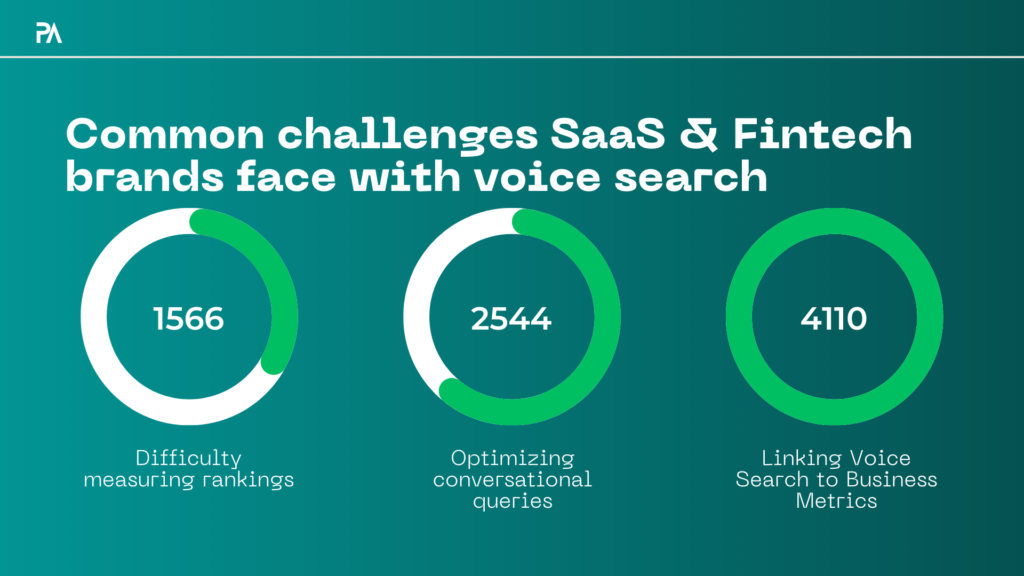
Common challenges SaaS & Fintech brands face with voice search
Voice search is powerful, but it comes with its own downsides. Many SaaS and fintech companies struggle to get the most out of it because it works differently from traditional SEO.
Here are the common setbacks these brands face with voice search:
1. Difficulty measuring rankings
Unlike traditional SEO, tracking voice search rankings is tricky. Most SEO tools don’t show which queries trigger voice results.
It’s also hard to define what it means to rank since voice assistants read only one answer. This makes it tough to measure success and fine-tune your voice search optimization strategies.
2. Optimizing conversational queries
SaaS and fintech content often use formal language or industry jargon. But voice search users don’t speak that way. This means that Long-tail queries and FAQs are often ignored. SaaS pages need to answer user questions in a simple and clear way. Fintech content should also break down complex financial terms into everyday language so that voice assistants can understand.
3. Linking voice search to business metrics
Connecting voice search to real business outcomes isn’t an easy task. It can be challenging to keep track of trial sign-ups, demo requests, MRR, or app downloads from voice queries. This is why some companies are hesitant to invest, even though it can directly improve conversions and organic search traffic.
How to track voice search rankings effectively
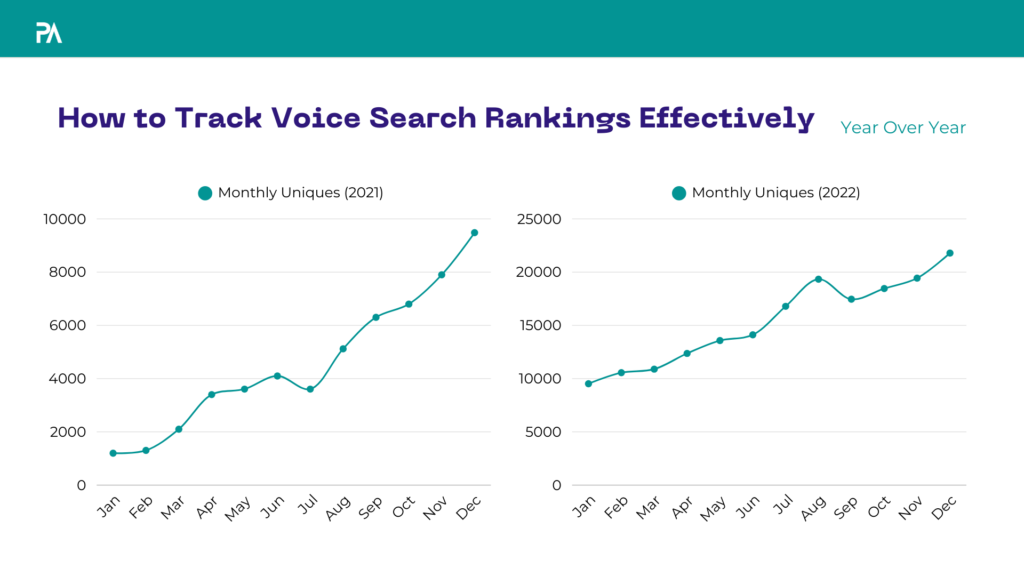
Understanding where your content appears in voice search is the first step to improving your SaaS or fintech SEO. Unlike traditional search, voice results tracking requires a different approach. Let’s explore practical ways to monitor your voice search ranking success.
1. Define what to track and KPIs
Start by identifying the metrics that matter most. Look at your voice search performance, including featured snippets and Q&A boxes. Track clicks from voice devices. Then measure conversions from spoken queries, like trial sign-ups, demo requests, or app downloads. This shows the real impact of voice search SEO on your SaaS business.
2. Tools & techniques for tracking voice search
There are tools to make tracking easier. SEMrush, Rank Ranger, and Ahrefs offer voice search tracking features. Google Search Console helps too, especially when paired with rich results data.
Adding structured data makes your content easier for voice assistants to read and improves visibility in voice search results.
3. Setting up a voice search monitoring workflow
Create a system to track performance consistently. Build dashboards to monitor voice query metrics and organic search traffic, and decide on reporting frequency. Tie these metrics to SaaS or fintech KPIs so you can see how voice search optimization drives growth and conversions.
Optimizing SaaS & Fintech content for voice search
Voice search and AI assistants are growing fast. And it’s not enough for SaaS and fintech companies to only rely on traditional content. Users now expect clear, quick answers, and search engines reward content that delivers them. Here’s how to optimize your content for voice search:
Target conversational keywords
Focus on how people speak naturally. Use FAQs and long-tail queries that match voice search queries. Also, understand the intent behind the questions. Tools like AnswerThePublic or SEMrush can help identify natural language queries your audience uses. Optimizing content this way increases your chances of appearing in voice search results.
Optimize technical SEO
Technical SEO is key for voice search optimization. Make sure your site has fast mobile performance since most voice searches happen on smartphones. Implement schema markup for Q&A, reviews, and product pages. This helps voice assistants read your content easily. Also, maintain HTTPS, structured data, and local SEO to improve credibility and search visibility.
Content structure for voice search
Always keep your answers clear and concise. It should be between 40 and 60 words. Use headings, bullet points, and tables to make your content easy to scan. Highlight product benefits in a natural, conversational tone. Doing this helps both users and search engines understand the value of your SaaS or fintech offering.
UX & voice interaction considerations
User experience plays a huge role in voice search rankings. Design web pages and apps that are voice-friendly. Make sure it’s fast-loading and easy to navigate. This flow helps users who rely on voice commands find answers quickly and interact smoothly with your brand.
How to measure the ROI and business impact of voice search
Voice search optimization only matters if it moves the business forward. For growing SaaS and fintech companies, this means measuring real outcomes like sign-ups, demos, and revenue. Here’s how to measure the ROI and business impact of your voice search SEO:
KPIs that matter for SaaS & Fintech
Start with metrics that really move the business. Look at demo requests, trial sign-ups, and account creations that come from pages ranking in voice search results.
Use Google Search Console to monitor impressions and clicks from question-based search queries. Then, review post-click behavior. If users from voice queries stay longer or convert faster, your voice search optimization is working.
Compare voice vs traditional SEO performance
Put voice and traditional SEO results side by side. Look at CTR, engagement, and conversion rates from the pages that appear in featured snippets or voice search results.
Voice search often brings lower traffic, but stronger intent and conversion. If those sessions lead to more demos or sign-ups, shift more resources into voice search SEO and supporting technical SEO.
Case examples/mini-case studies
A SaaS company optimized FAQ pages around natural questions that users usually ask. They also tracked results and performance using Google Search Console. Traffic stayed flat, but demo requests increased.
A fintech company rewrote its product explanations in a conversational language for voice assistants and users to understand better. They saw higher completion rates for account sign-ups from voice-driven visits.
The lesson is simple. Measure actions, not volume. Voice search may deliver fewer visits, but better-qualified leads who are ready to take action.
Advanced strategies to stay ahead in voice search

Advanced voice search strategies give SaaS and fintech companies a real advantage. While many competitors stick to the basics, staying ahead means adapting to how users and search engines interact with voice queries.
Here’s how to boost your visibility in voice search results and stay ahead of the competition:
Continuous keyword research for conversational queries
Voice search queries are more conversational and keep changing. Regularly update your content to match the way users ask questions. Use tools like SEMrush or AnswerThePublic to find emerging long-tail keywords and voice search queries. It makes your content relevant for voice assistants.
Leveraging AI and chatbots
AI can predict the questions users are asking. This way, you can create content that answers them before they’re asked. Integrating voice-friendly chatbots into your app or website doesn’t stop at improving user experience. It also increases the chance your content gets read aloud by voice assistants. This can drive more demo requests, trial sign-ups, and account creations directly from voice search users.
Local & device-specific optimization
Most times, voice searches include location and device context. Optimize your content for mobile users and smart speakers. Make sure it targets relevant local queries so that search engines clearly understand what you offer. This boosts your chances of capturing users who are ready to take action in voice search results.
Common mistakes to avoid in SaaS & Fintech voice SEO
Many SaaS and fintech teams unknowingly make choices that stop voice assistants from choosing their content. Understanding these common mistakes is key to stronger visibility and real returns from your voice search SEO efforts.
Here are the common mistakes that quietly hurt search visibility and performance:
Overstuffing keywords instead of using natural language
Packing your content with keywords might have worked for traditional SEO. But voice assistants prefer natural, conversational language. Users asking questions via voice want clear and human-sounding answers. Focus on answering queries the way people speak to improve search visibility in voice results.
Ignoring structured data and schema markup
Without structured data and proper schema markup, search engines struggle to understand your content. This makes it harder to appear in featured snippets, Q&A boxes, and ocal voice results. With proper markup, voice assistants can easily read your content aloud accurately.
Not tracking performance or business impact
If you’re not measuring clicks, conversions, or demo requests from voice search users, you won’t know if your efforts are paying off. Linking voice search metrics to business KPIs is essential for SaaS products and fintech services to justify investment and optimize your SEO strategy.
Neglecting mobile and page speed
Most voice searches happen on mobile devices or smart speakers. Slow, unresponsive pages hurt both user experience and voice search rankings. Make sure your site loads quickly and works seamlessly on all devices. It improves search engine optimization and helps capture more organic search traffic from voice queries.
Action steps
Voice search is changing how users find and choose SaaS and fintech products. Tracking and improving voice search rankings helps you stay visible when search engines decide which answer gets spoken. If your site isn’t optimized for voice search, you’re already missing out on high-intent traffic.
Moving forward, focus on the basics that really matter. Use Google Search Console and SEO tools to track voice search queries and outcomes—like demos, trials, or sign-ups. Optimize your content to sound natural. Answer questions clearly, and support voice search optimization with solid technical SEO. Teams that keep improving will win more voice search visibility as adoption grows.
FAQs
1. What is the best way to improve search engine ranking?
Focus on creating content that answers what people are asking. Make sure your site’s technical SEO is solid and your pages load fast. Use natural, conversational language for voice search so search engines understand your site.
2. What helps to find out what could be done to improve ranking on search engines?
Check your data. Google Search Console shows you which search queries bring people to your site and where you’re missing out. SEO tools can spot gaps in content and areas where search optimization can do more.
3. Which tools are best for monitoring voice search performance?
Start with Google Search Console to see question-based queries and rich results. Tools like SEMrush or Rank Ranger let you track featured snippets and voice search results over time.
4. How do I track voice search rankings for my SaaS or Fintech website?
Look at the pages that appear in featured snippets or Q&A boxes. Track long, natural voice search queries in Google Search Console. Also link that traffic to demos, trial sign-ups, or account creations.
5. How can SaaS & Fintech companies measure ROI from voice search?
Connect voice traffic to real business results. Track demos, trial sign-ups, account creation, or purchases coming from organic search traffic on voice-optimized pages.
6. Which tools are best for monitoring voice search performance?
Use Google Search Console for visibility and clicks. Then add SEO platforms that monitor snippets and voice results. This helps you see what’s working and what drives real conversions.